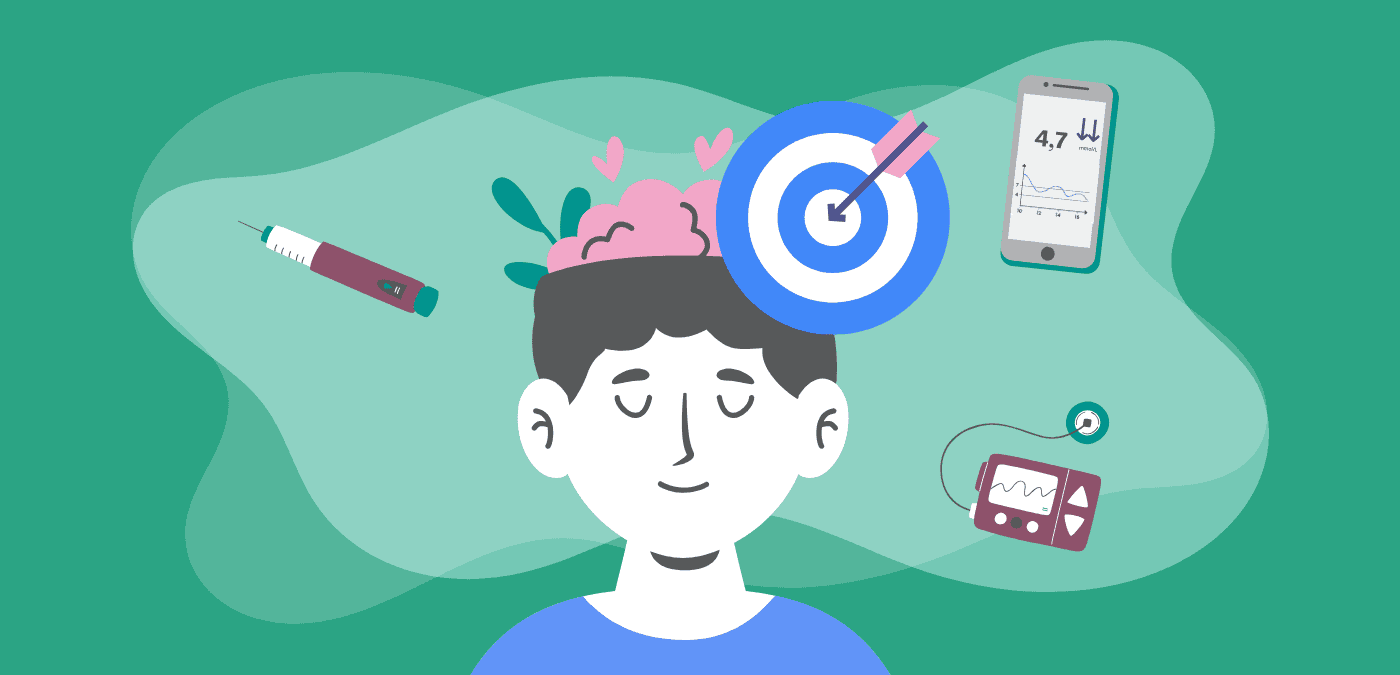
With Mental Health Week starting soon, the month of May is the perfect time to talk about an aspect of type 1 diabetes (T1D) that is often overlooked: how it feels inside. Beyond blood sugar data and insulin dose adjustments, a person’s mental and emotional state deeply affects daily life. Talking about it means acknowledging that mental health is not to be taken separately from diabetes, because the two are intrinsically related.
Mental well-being, and the many ways it can be affected
Living with T1D implies bearing a constant, invisible mental load which varies from one person to another and from one life stage to another.
Some may have strong fear of hypoglycemia, and decide to eat a little more “just in case,” to avoid physical activity or to take less insulin than they need. While it’s a legitimate fear, it can also get invasive. Others are more concerned with hyperglycemia and long-term complications. This can lead to constantly seek “perfect control,” with a dash of perfectionism. Loneliness and anxiety, whether related to unexpected situations, potential complications or constant management, can also be part of the mix. But even with a lot of support, it can be difficult to feel understood by those who don’t live with this condition.
After diagnosis, over time, diabetes can also affect one’s identity. Some people with diabetes feel like the condition takes up so much space in their day-to-day life that it spills over other essential parts of their lives.
These experiences are all valid, and deserve to be acknowledged. Diabetes management is not an exact science; all the good intentions and energy in the world won’t avoid hyperglycemia, missed doses or difficult periods, so it’s easy to fall into self-blame. It should be noted that a constellation of factors, many of which can’t be controlled, can affect blood sugar levels and insulin needs (e.g., outside temperature, waiting times at the restaurant).
Mettre des mots pour mieux comprendre
In their web capsule series Healthy Mind, Aude Bandini, professor of philosophy and patient partner with the BETTER project, and Sylvain Iceta, psychiatrist and researcher, broach these topics with fun and humour.
This collection of videos covers different aspects of mental health in the context of T1D. The goal is to normalize the wide range of emotions associated with T1D, and to openly discuss topics that are often overlooked, such as mental load, perfectionism and emotional fatigue.
Finding your own balance
If you live with T1D, finding balance means learning how to live with this condition and its treatment, requirements and restrictions, and how not to let it take up all the space. It’s a constant adjustment that builds over time, even though at times, it feels like you’re stalling, or going backwards, even. It is possible to adapt and reach a certain feeling of serenity. Diabetes cannot be “paused,” of course, but at times, it’s OK, necessary even, to give yourself some time to breathe, to accept imperfection, to simplify certain tasks, to reassess your expectations and, even, to let go, temporarily, to give yourself the time to catch your breath.
Diabetes burnout is real. It is caused by the constant, relentless need to be attentive. Diabetes burnout often leads to loss of motivation, feelings of despair and helplessness, and even a sense detachment from diabetes management, as if it’s no longer the person’s concern.
This is why it is essential to surround yourself with the right people and share your difficulties. Support from loved ones, healthcare professionals or diabetes communities can make a real difference. Putting words on what you experience, sharing and feeling heard without judgment can ease the invisible burden that comes with T1D.
Here are resources for you to view at any time:
- Breakthrough T1D has put together a directory of professionals trained in both mental health and type 1 diabetes.
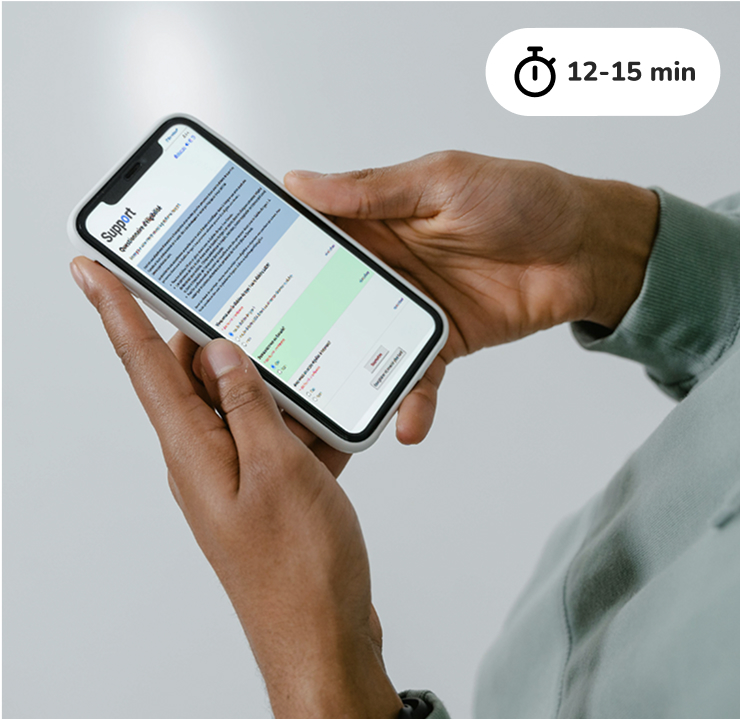
- The Support platform features a section dedicated to mental health, with topics related to T1D such as mental load and diabetes burnout, depression and stigmatization. To view this section, all you need to do is to log in!
Written by: Amélie Roy-Fleming, RD, CDE, M.Sc.
Reviewed by:
- Sarah Haag, R.N., B.Sc.
- Aude Bandini, Ph.D., patient partner of the Type 1 BETTER project