Eating habits are rarely trivial. Eating is first and foremost a biological need that can’t just be ignored, unlike alcohol or other habits that are best avoided. But it’s also much more than that. Eating is a social activity, front and centre in shared meals, festivities and family traditions; it evokes pleasure, culture, comfort, memories. However, it can also become a source of anxiety. In a society where “healthy eating” is on everyone’s mind, relationships to food can become complex.
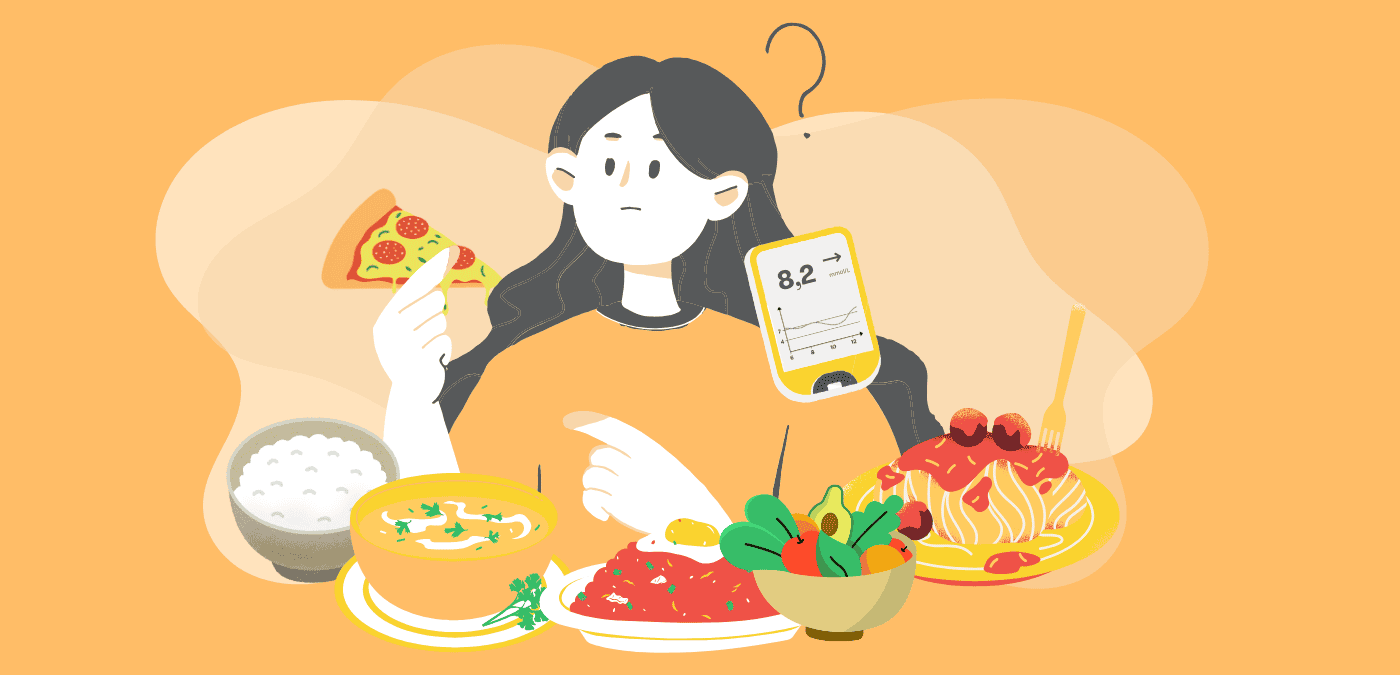
When you get diagnosed with type 1 diabetes (T1D), you enter into another food dimension. You learn that nearly everything you eat raises blood sugar, and that you need insulin to keep it balanced. Most importantly, you now need to estimate the quantity of carbohydrates—a nutriment present in everyday foods such as bread, pasta, rice, fruit and desserts—you eat to determine what insulin dose you need.
Just a few decades ago, people with T1D basically had to eat the same, low-carb meals every day. Nowadays, carb counting should give them the freedom to eat whatever they want, as long as insulin doses are adjusted accordingly.
When food leads to anxiety
Accurate carb count, accurate insulin dose taken at the right time: everything seems “perfect”. Unfortunately, blood sugar doesn’t always react as expected. Other than carbs, countless factors can influence blood sugar: fibre, fats, alcohol, stress, hormones, sleep, physical activity, infections … it’s often frustrating, discouraging even.
For some, the anxiety stems from fear of hypoglycemia, frustration when the blood sugar rises despite their efforts to avoid it, or feelings of guilt when the results aren’t as expected. Many people also mention the mental fatigue associated with the constant need to anticipate, calculate and make adjustments, sometimes with no improvement in sight. Continuous glucose monitoring (CGM) is undeniably beneficial, but it also shows variations that would go unnoticed with capillary blood sugar measurements. It gives the opportunity to improve, but also causes frustration.
Medical check-ups can also influence the relationship to numbers, sometimes unintentionally. For instance, automatic weigh ins right at the beginning of the appointment will make some people more focused on their body and weight. Then, when consulting with your endocrinologist, they will centre on numbers included in your blood test results. Whether they’re good or not likely influences how the appointment will go. In a context where daily life revolves around blood sugar levels, insulin doses and grams of carbs, throwing these numbers into the mix only adds to the climate of control and ends up feeling heavy, both literally and figuratively.
The motivation to do well and be thorough can gradually slip into a heavier dynamic, or even into an obsession with nutrition.
Orthorexia: when healthy eating becomes an obsession
It’s not even about carbs, blood sugar or calories. It’s about the very relationship to food and where it comes from, whether it was processed and its “purity”. People with orthorexia have a very strict definition of what counts as “healthy food”. They might, for instance, exclusively eat local, organic, non-processed foods and closely monitor their nutritional value. It sure is a good idea to limit processed foods, but avoiding them at all costs is a big undertaking. With nutrition taking so much space, orthorexia leads to anxiety and social isolation.
- Am I able to eat something simply because I feel like it, without feeling stressed or guilty?
- Are my food choices mainly based on fear or a need for control?
- Do I tend to isolate myself socially because of food?
- Do my thoughts about food take up a large part of my mental space?
If you recognize yourself in some of these questions, it doesn’t mean you have an eating disorder. It may simply indicate that your relationship to food could benefit from some rebalancing—and that’s valuable insight.
Precise management vs. excessive control: what’s the difference?
When it comes to T1D, the line between “balanced management” and an anxiety-inducing relationship to food is sometimes blurry, and that’s completely understandable.
Precise management involves counting carbs and adjusting insulin on a daily basis to take care of your health, while remaining flexible. It also means accepting that life with T1D requires planning, but also involves a lot of unexpected situations, and that this is okay
Excessive control, on the other hand, is about eliminating all uncertainty. Every meal becomes a trial, and every blood sugar fluctuation, a failure. Yet, with T1D, it is impossible to control everything. Aiming for perfection ultimately limits the freedom and pleasure of eating.
The difference between one and the other is not always in a person’s behaviour, but sometimes is in the place it occupies and the distress it causes.
Making peace with food
If eating has become a source of stress, it’s not a sign of weakness. Rather, it often reflects a serious commitment to your health. And the good news is: it is possible to regain a more peaceful relationship to food, even while living with T1D. This doesn’t mean stopping counting carbs, ignoring blood sugar, or no longer adjusting insulin. Rather, it’s about gradually reintroducing flexibility, confidence, and enjoyment into your daily life. It’s not always easy; it takes time, patience, and sometimes, support.
Here are a few concrete strategies.
- Put the numbers back into perspective
A blood sugar reading isn’t a judgment on you or your food choices, but just one piece of information among many, and it’s influenced by numerous factors, most of which are beyond your control. A high reading after a meal says nothing about who you are or the effort you put in.
- Move beyond the “good” vs. “bad” binary
No food is inherently “bad,” be it for blood sugar or overall health. Insulin exists precisely to allow us to eat what we want; doses only need to be adjusted accordingly. Categorizing foods as either “good” or “bad” can increase anxiety and feelings of guilt, and spoil the pleasure of eating.
Sometimes it helps to take a step back and simply ask yourself: What do I want? Am I truly hungry? What would make me feel good right now? Approaches such as intuitive and mindful eating can help you reconnect with yourself, beyond numbers and nutrition labels.
- Forget about perfection
Healthy eating isn’t just about nutrient intake or blood sugar levels after a meal. It involves eating a variety of foods that support the body, respect your cravings and internal cues, and promote mental well-being—all while taking into account social and cultural contexts. Learning to let go of perfection can make a real difference. Less anxiety around meals, less stress over every number, and perhaps, little by little, a bit more freedom and enjoyment in eating. Allowing yourself to make mistakes is also allowing yourself to be human, with or without diabetes.
- Talk about it
If food is a significant source of anxiety, makes you feel persistent guilt, or isolates you socially, talking about it with your healthcare team—especially a dietician or mental health professional—can make a real difference. You don’t have to go through this alone.
Furthermore, there is good reason to stay optimistic: research is advancing rapidly to reduce or eliminate the need to calculate insulin doses at mealtime, which could make living with T1D simpler and more peaceful.
Find out more
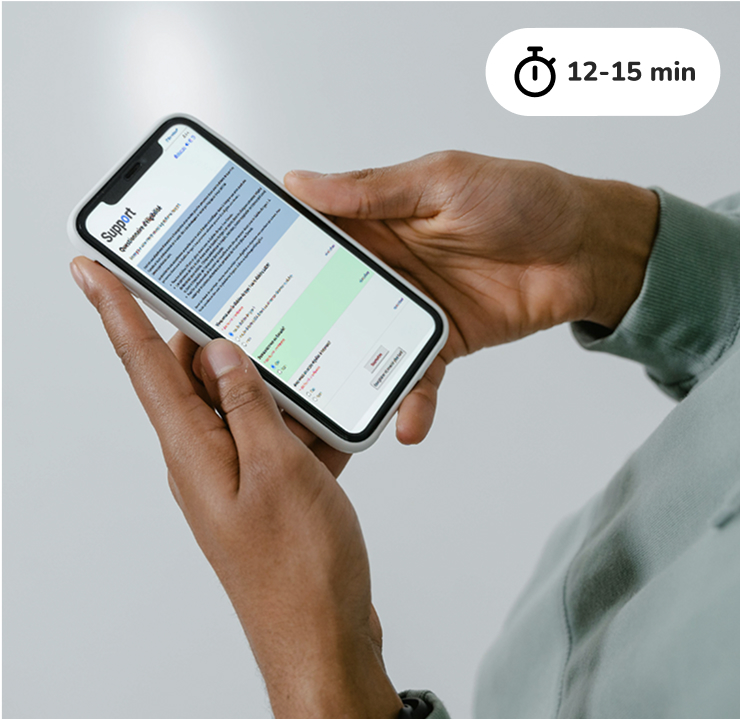
You can view an entire module on eating disorders on Support, our free online training platform on type 1 diabetes, as well as concrete tools to improve your daily life. All you have to do islog in or create your free account.
Written by: Sarah Haag, Clinical Nurse, B.Sc.
Reviewed by:
Rémi Rabasa-Lhoret, MD, Ph.D.
Anne-Sophie Brazeau, P.Dt., Ph.D.
Amélie Roy-Fleming, RD, CDE, M.Sc.
- Chloé Freslon, Domitille Dervaux, Jacques Pelletier, Aude Bandini, Michel Dostie, Claude Laforest patient partner of the Type 1 BETTER project