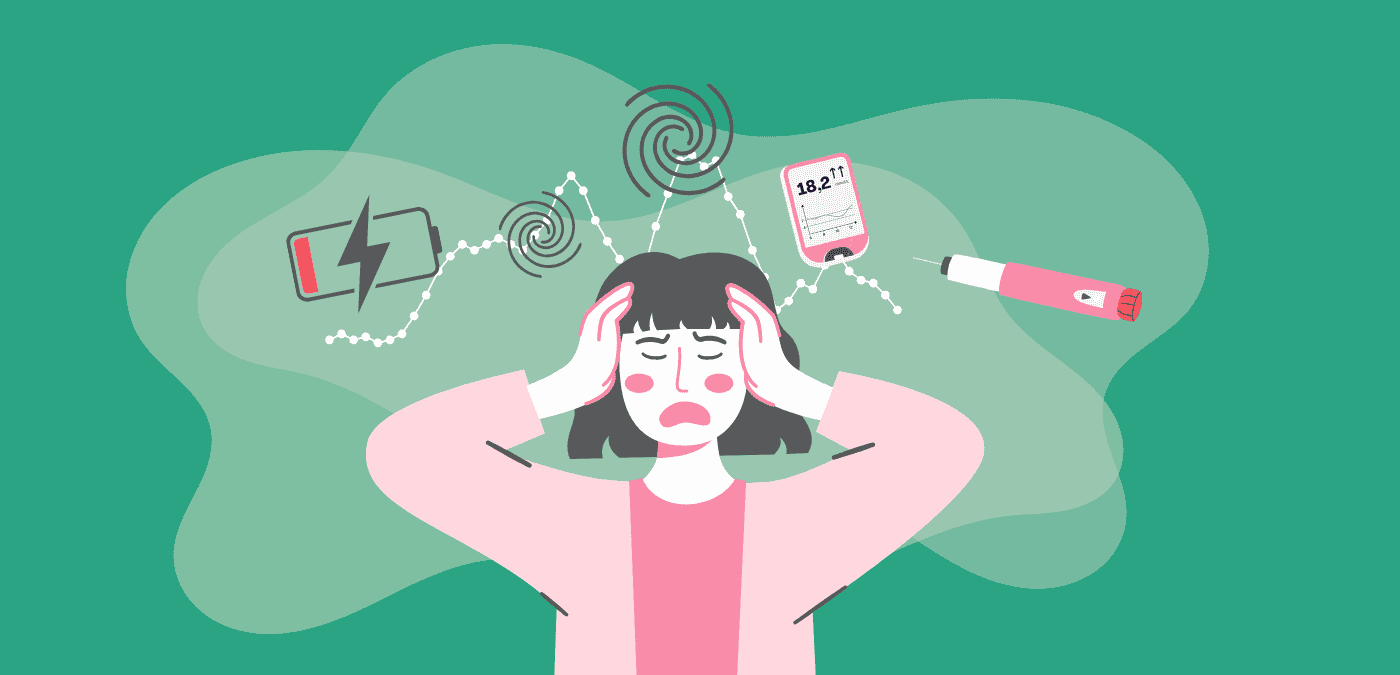
Living with type 1 diabetes involves following strict routines that involve monitoring blood sugar regularly, administering and adjusting insulin doses according to meals, planning physical activity, managing hypo- and hyperglycemia and keeping an eye on body signals.
Add an attention deficit disorder to the mix, whether with (ADHD) or without (ADD) hyperactivity, and these requirements become all the more complex. ADHD is a neurodevelopmental disorder characterized by difficulties with concentration, keeping things organized, planning and impulsivity control. While the condition itself is widely discussed, its concrete impacts, especially on T1D management, are still misunderstood, and little is known about coping strategies.
Studies suggest that ADHD might be more prevalent in people with T1D than in the general population, highlighting the need for wider recognition of this condition and better adapted care.
How does ADHD affect diabetes management?
ADHD symptoms can make it more difficult to manage T1D on a daily basis.
- Inattention can lead to oversights, such as forgetting to check blood sugar or inject insulin, or wondering whether a dose was taken or not. Inversely, hyperfocusing on a task can lead to ignoring alarms or postponing essential interventions for T1D management. In social contexts, inattention can also disrupt learning or the ability to understand instructions, which, at the doctor’s office, can be misconstrued as a lack of motivation.
- Food impulsivity leads to spontaneous snacking and affects insulin doses and carbs management.
- Physical or mental hyperactivity can provoke unexpected blood sugar fluctuations.
T1D management is also affected by other factors associated with ADHD such as sleep disorders (short or irregular sleep), which can destabilize blood sugar levels and hinder decision-making.
Additionally, side effects from ADHD medication—reduced appetite, changes in metabolism—affect weight management and insulin doses.
Studies have shown that people with T1D who also have ADHD have a higher risk of diabetic ketoacidosis, higher glycated hemoglobin levels and a higher cardiovascular risk.
What strategies can I use to improve T1D management in spite of ADHD?
1. Keep some snacks handy.
On days when your appetite is reduced, often due to medication, having simple, nutritious snacks on hand can be very helpful. Individually packed foods high in complex carbs and protein such as Greek yogurt, nuts, protein bars, fruit and cheese, are good choices as they reduce the number of decisions to make and the risk of oversight. This will ensure you get enough calories and help prevent hypoglycemia.
2. Set alerts and inform those around you.
If you tend to immerse yourself in a task, setting alerts to remind you to check your blood sugar, to take an insulin dose or a snack or to change infusion sets can act as a safety net, as long as you respond right away. You can also ask a relative, your partner or a friend to check on you at certain moments of the day or to follow your continuous glucose monitor (CGM) data to have additional support and avoid oversights.
3. Use a continuous glucose monitor.
CGMs (e.g., Dexcom, FreeStyle Libre) display real-time blood sugar levels and help to quickly detect hypo- and hyperglycemia with customizable alerts.
4. Plan supplies and meals.
While living with ADHD also means dealing with a heavy mental load and struggling with organization, planning can be the key to a simpler daily routine. It can be as simple as preparing certain meals and snacks in advance, keeping all supplies (e.g., insulin, pens, needles, sensors) together and checking every night whether anything needs to be charged or put away. This can help avoid oversights and better organize the following day.
However, “logical” routines aren’t always effective for people with ADHD. As a possible solution, tasks that are often overlooked (e.g., taking insulin at bedtime) can be paired with tasks that get done every day (e.g., taking a shower) with a simple reminder (e.g., keeping an insulin pen in the bathroom). Also, to avoid any confusion between long-acting and rapid-acting insulin, it can be helpful to keep them in two separate spots, each associated with a specific task.
5. Talk to your healthcare team regularly.
Sharing openly with your healthcare team how ADHD affects your diabetes will help them better understand the challenges you face and adjust expectations. They can also help you to adjust your insulin doses according to appetite fluctuations, monitor medication side effects and establish individualized strategies.
6. Use innovative technologies.
With hybrid closed-loop systems, also called artificial pancreases, the administration of insulin is partly automated, which can be helpful for people who regularly forget to take their insulin, who have highly fluctuating blood sugar or who have difficulty anticipating their insulin needs.
It is entirely possible to live well with T1D and ADHD, as long as the disorder is detected, diagnosed and treated as needed. Along with that, there needs to be adapted routines, support from technologies and the acceptance that even when ADHD doesn’t directly interfere with T1D management, blood sugar levels won’t always be perfect.
ADHD should not be seen only as an obstacle. In certain situations, hyperfocus can actually become an asset, whether it’s for finding creative solutions to deal with unexpected blood sugar levels, or to analyze glucose profiles in-depth to better understand how they work.
Find out more
For insightful tips and a full module on ADHD and type 1 diabetes, create an account or log in to the Support platform.
Ressources :
- Plateforme Support – Projet BETTER, Cours « TDAH et diabète de type 1 », www.type1support.ca
- Zare Dehnavi A, Elmitwalli I, Alsharif HOH, Shervin Razavi A, Gumpel TA, Smith A, Weinstock RS, Faraone SV, Zhang-James Y. Effects of ADHD and ADHD treatment on glycemic management in type 1 diabetes: A systematic review and meta-analysis of observational studies. Diabetes Res Clin Pract. 2024 Mar;209:111566. doi: 10.1016/j.diabres.2024.111566. Epub 2024 Feb 13. PMID: 38360095.
- Shengxin Liu, Ralf Kuja-Halkola, Henrik Larsson, Paul Lichtenstein, Jonas F Ludvigsson, Ann-Marie Svensson, Soffia Gudbjörnsdottir, Magnus Tideman, Eva Serlachius, Agnieszka Butwicka, Neurodevelopmental Disorders, Glycemic Control, and Diabetic Complications in Type 1 Diabetes: a Nationwide Cohort Study, The Journal of Clinical Endocrinology & Metabolism, Volume 106, Issue 11, November 2021, Pages e4459–e4470, https://doi.org/10.1210/clinem/dgab467
- Ai Y, Zhao J, Liu H, Li J, Zhu T. The relationship between diabetes mellitus and attention deficit hyperactivity disorder: A systematic review and meta-analysis. Front Pediatr. 2022 Sep 29;10:936813. doi: 10.3389/fped.2022.936813. PMID: 36245747; PMCID: PMC9560781.
- Aly, H.H., AbdelAziz, E.A., Mousa, M.A. et al. Attention-deficit hyperkinetic disorder among children and adolescents with type 1 diabetes: a cross-sectional study. Egypt Pediatric Association Gaz 70, 54 (2022). https://doi.org/10.1186/s43054-022-00147-6
- Xie XN, Lei X, Xiao CY, Li YM, Lei XY. Association between type 1 diabetes and neurodevelopmental disorders in children and adolescents: A systematic review and meta-analysis. Front Psychiatry. 2022 Nov 22;13:982696. doi: 10.3389/fpsyt.2022.982696. PMID: 36483136; PMCID: PMC9722754.
Written by: Sarah Haag, Clinical Nurse, B.Sc.
Reviewed by:
- Rémi Rabasa-Lhoret, MD, Ph.D.
- Anne-Sophie Brazeau, P.Dt., Ph.D.
- Amélie Roy-Fleming, RD, CDE, M.Sc.
- Cassandra Locatelli, B.Sc.
- Claude Laforest, Michel Dostie, Chloé Freslon, patient partners of the BETTER project.