While talking about sexual health, whether with friends or your healthcare team, can feel uneasy, sexuality is part of your overall well-being just as much as sleep, stress management and mental health are. Most importantly, it is entirely possible to have a fulfilling sex life when you live with type 1 diabetes (T1D).
T1D can affect desire, comfort, sensations and self-esteem, and raise more concrete concerns such as the risk of hypoglycemia during sexual intercourse or stress associated with technologies (e.g., insulin pump, sensor). These challenges can have a great impact on people. While T1D remains a factor that can’t be ignored and adjustments sometimes don’t work right away, with targeted information and a few practical adjustments, it is still possible to enjoy intimacy.
How does blood sugar affect sexual intercourse?
Sexual intercourse can be considered as physical activity and as such, can have an impact on blood sugar as the body moves, the heartbeat accelerates and hormones come into play. Depending on people and circumstances, hypoglycemia can hit during the act, and even persist in the following hours. Although more rarely, some people also report rising blood sugar in contexts when stress or excitement is high.
This is no one-size-fits-all. Over time, each person learns to recognize their own trends.
Concrete ways to fully enjoy your sex life and spontaneity (in your own way) with T1D
Although sexual life with T1D can require a bit more attention, embracing and enjoying the moment and closeness is perfectly possible. There are ways to feel safer, to plan for the unexpected and to focus on shared pleasure. Spontaneity is not always possible, but some adjustments can allow for more freedom and confidence.
1) Plan without ruining the mood
Without turning the moment into a medical check-up, a quick check on your blood sugar can put you at ease and reduce stress. If it’s low or lowering, it’s best to have a small snack to avoid any interruptions later; it’s a good idea to keep some quick-acting carbs (e.g., juice, glucose tablets) nearby (e.g., in your bedside table) to help you feel safe and without a worry.
The risk of hypoglycemia is generally lower in the morning before breakfast, when there is less active insulin in the body, due to the dawn phenomenon (natural blood sugar increase during the early hours or upon waking, associated with the release of hormones such as cortisol). Those who have fear of hypoglycemia may find this moment safer.
If you wear an insulin pump and opt to take it off and suspend the administration of insulin, you may want to set a reminder to reconnect it quickly; ideally, you shouldn’t be without insulin for more than one hour.
If you prefer to leave the pump on, you can temporarily reduce the basal rate (e.g., physical activity mode, increasing target blood sugar) to mitigate the risk of hypoglycemia and enjoy the moment stress-free.
2) Know what to do if hypoglycemia hits
It is essential to let go of any guilt: sexuality is not a performance measurement, and it can be enjoyable, even though it’s “imperfect.” Hypoglycemia is your body’s reaction to physical effort. The most important thing to do is to take a break and treat low blood sugar. Then, depending on how you feel, you can resume the intimate moment, reorient it or even postpone it.
3) Feel free in spite of technology (pump, sensor, alarms)
Insulin pumps, sensors and alarms are part of daily life, and can sometimes interfere with intimate moments. Some keep the pump connected, others disconnect it temporarily. It doesn’t really matter which you choose as long as you are comfortable and safe. For instance, you can limit the risk of hyperglycemia by temporarily disconnecting the pump (generally no longer than one hour) and reconnect it quickly after, to enjoy the moment all while managing your blood sugar.
In general, it helps to know where, for example, your sensor, catheter or Pod are installed to avoid incidents (e.g., peeled off device, discomfort). It’s a good idea to secure them (e.g., extra adhesive, armband or belt) or to choose safer sites.
An alarm is a reassuring reminder that your body is communicating with you. Continuous glucose monitors (CGMs) settings can be adjusted so that alarms sound only if action is needed. With some planning, your devices can become true allies on the daily, integrate intimate moments more smoothly and help you enjoy them with peace of mind.
4) Communicate simply with your partner
Communication is key to a stress-free moment. There is no need to prepare a long speech, and you can even add in some humour. It can be as simple as “If I go into hypoglycemia, I’ll just need a break and some sugar,” or “If you feel like I’m getting weaker or not my usual self, please remind me to check my blood sugar.” This can help avoid the unexpected and make the moment feel safer and more intimate.
5) Don’t try to be perfect
Veering off your usual diabetes management (e.g., different routine, not wanting to interrupt a moment, postponing a dose, taking off a device, forgetting something) during intimate moments is normal, human, and it happens to everyone. Self-compassion is one of the best ways to feel happy and free.
6) Plan also for “after”
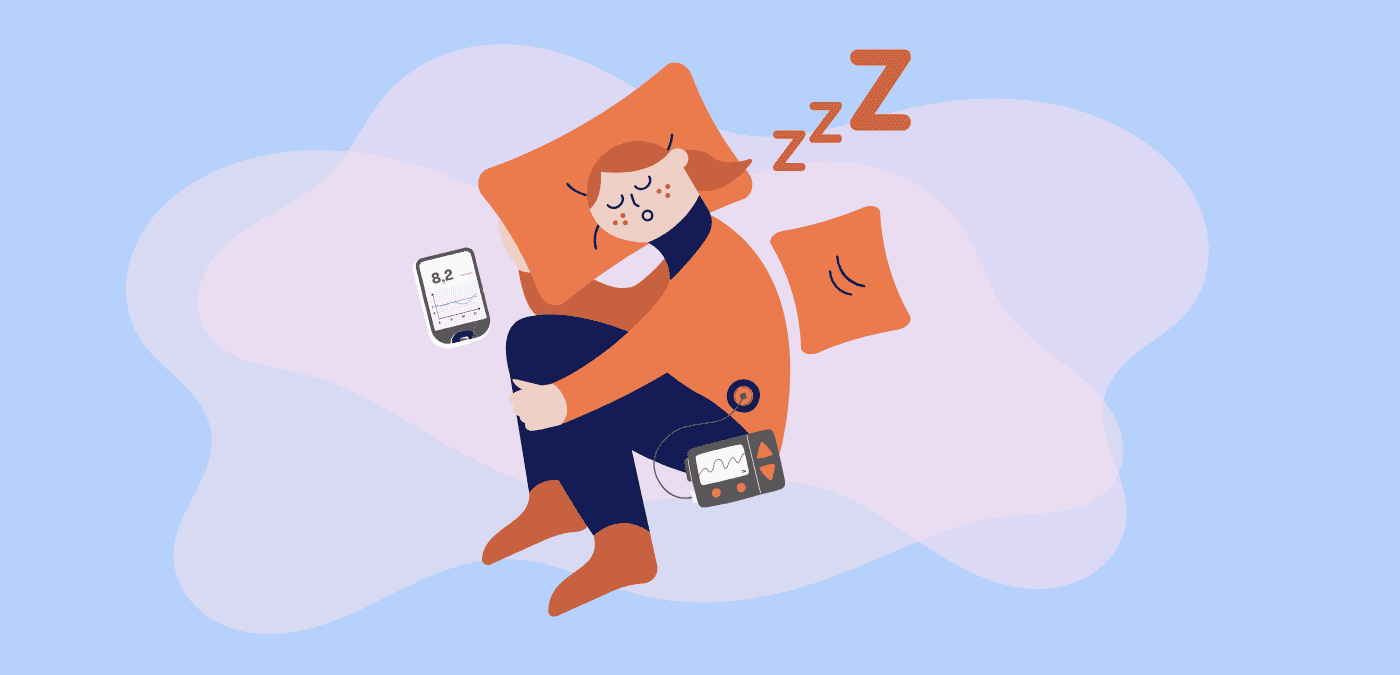
Hypoglycemia can hit in the hours following an intimate moment, even overnight. If it happens regularly, it’s a good idea to observe how it happens, and to discuss it with your healthcare team when you feel ready. This is a frequent, regular topic, and talking about it can help you find adjustments adapted to your treatment. If you use an insulin pump and usually reduce your basal rate during intimate moments, you can extend the reduced basal for as long as needed to have a good rest.
And what if the stress is overwhelming?
Fear of hypoglycemia, performance anxiety and overthinking can take over desire and pleasure. It is normal to find that T1D takes up a lot of headspace. If it becomes a source of frustration or inhibition, maybe talking with a nurse, a doctor, or even a sexologist could help make a big difference.
While T1D can affect your sexual life, it doesn’t have to define it. Over time, many find ways to experience satisfying, meaningful and spontaneous moments. Planning, communication and self-compassion are a good foundation for carefree intimate moments.
Find out more
For more information and helpful tips, log on or register to our T1D-focused platform, Support.
There, you will have access to various modules such as All about sexual health and All About Body Image, designed to help you confidently achieve a fulfilling and positive sex life.
References
- Sexual health and type 1 diabetes. Webinar presented by Dr Alice YY Cheng as part of the BETTER project. October 2023. https://www.youtube.com/watch?v=iSAeQdgvATA
- Sex and diabetes, Diabetes UK, Living with diabetes, https://www.diabetes.org.uk/living-with-diabetes/life-with-diabetes/sex-and-diabetes
Written by: Sarah Haag, Clinical Nurse, B.Sc.
Reviewed by:
- Rémi Rabasa-Lhoret, MD, Ph.D.
- Anne-Sophie Brazeau, P.Dt., Ph.D.
- Amélie Roy-Fleming, RD, CDE, M.Sc.
- Cassandra Locatelli, B.Sc.
- Claude Laforest, Michel Dostie, Chloé Freslon, Laurie Lepine patient partners of the BETTER project.