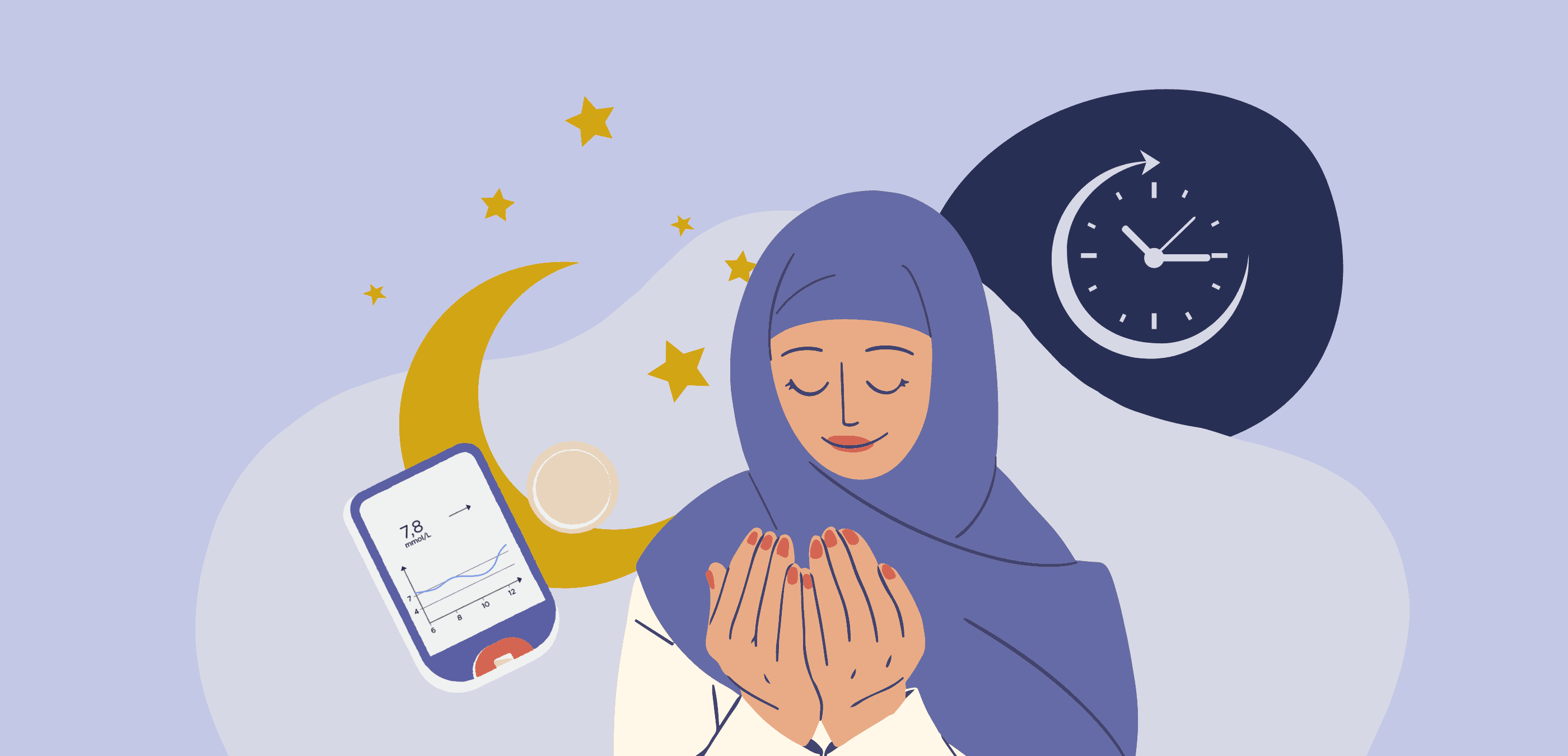
Ramadan is a holy month observed by Muslims around the world. During this month, Muslims fast between dawn and sunset, which means they don’t have anything to eat or drink during the day.
In the Islamic faith, some people are exempt from observing Ramadan, such as pregnant women, children and people with certain chronic illnesses (including type 1 diabetes [T1D]). However, the decision to observe it or not is entirely personal. In fact, about 43% of Muslims with T1D who live in predominantly Islamic countries decide to fast.
If you live with T1D and decide to fast, you must be careful to avoid a potentially significant glycemic imbalance potentially leading to severe hypoglycemia or ketoacidosis. This risk can be reduced if using the most recent hybrid closed-loop systems. Fasting is not recommended if:
- Glycated hemoglobin (or HbA1c level, which is the average plasma glucose concentration over three months) higher than 9%;
- A severe hypoglycemic episode or diabetic ketoacidosis in the last three months or hypoglycemia unawareness;
- Diabetes-related complications.
Observing Ramadan safely
A visit with the healthcare team 1 to 3 months before Ramadan will help to assess the personal risk of the person wishing to fast and for insulin doses to be adjusted as needed.
Here are some tips for maintaining blood sugar balance during the holy month of Ramadan:
Blood sugar management
- If a hypoglycemia arises, it is very important that you break your fast and ingest fast-acting carbs.
- If your blood sugar or ketone body levels are too high, you should follow the intervention plan for ketone bodies. It is also recommended to break your fast.
- Avoid high-intensity physical activity during Ramadan.
- Use a continuous glucose meeter (CGM).
What can I eat?
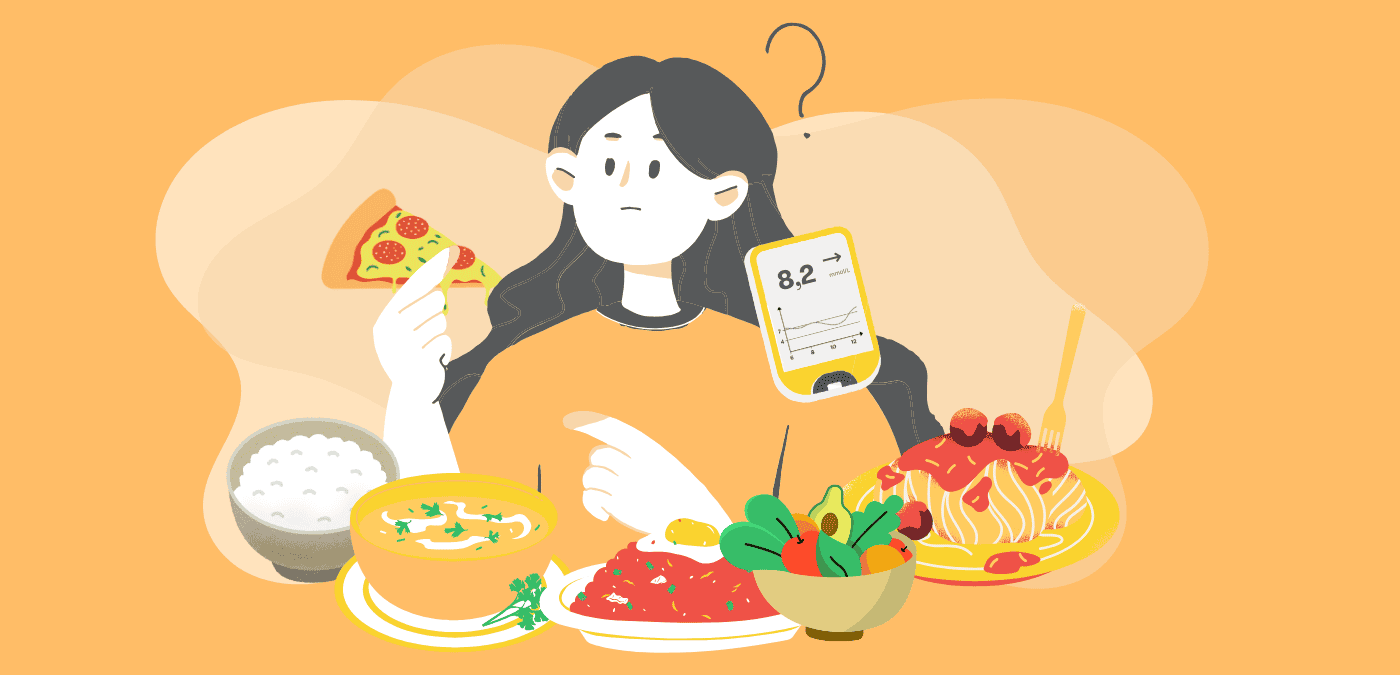
- For sahur (meal eaten before dawn), eat complex carbs (such as beans or whole grains).
- For iftar (fast-breaking meal), combine fast-acting carbs (such as dates, white bread) with a source of protein (eg., milk).
- Once your fast is over, eat balanced meals at regular times.
- Drink 2 L of water between sundown and sunrise to prevent dehydration.
If your blood sugar levels are often out of range or if a complication arrises, make sure you call your healthcare team as soon as possible.
For more advice on managing blood sugar during Ramadan, login and check out our course: Type 1 Diabetes and Ramadan.
Written in May 2021, updated January 2026
References:
- Ibrahim M, et al.. Recommendations for the Management of Diabetes During Ramadan Applying the Principles of the ADA/ EASD Consensus: Update 2025. Diabetes Metab Res Rev. 2025 Jul;41(5):e70057. doi: 10.1002/dmrr.70057.
- Diabetes and Ramadan, Practical Guidelines, International Diabetes Federation, 2021
- Al-Arouj, M., et al. (2005). Recommendations for management of diabetes During Ramadan. Diabetes Care, 28(9), 2305-2311. doi:10.2337/diacare.28.9.2305
- Ramadan and diabetes. (n.d.). Consulté le 1er mars 2021. https://guidelines.diabetes.ca/healthcareprovidertools/ramadan-and-diabetes