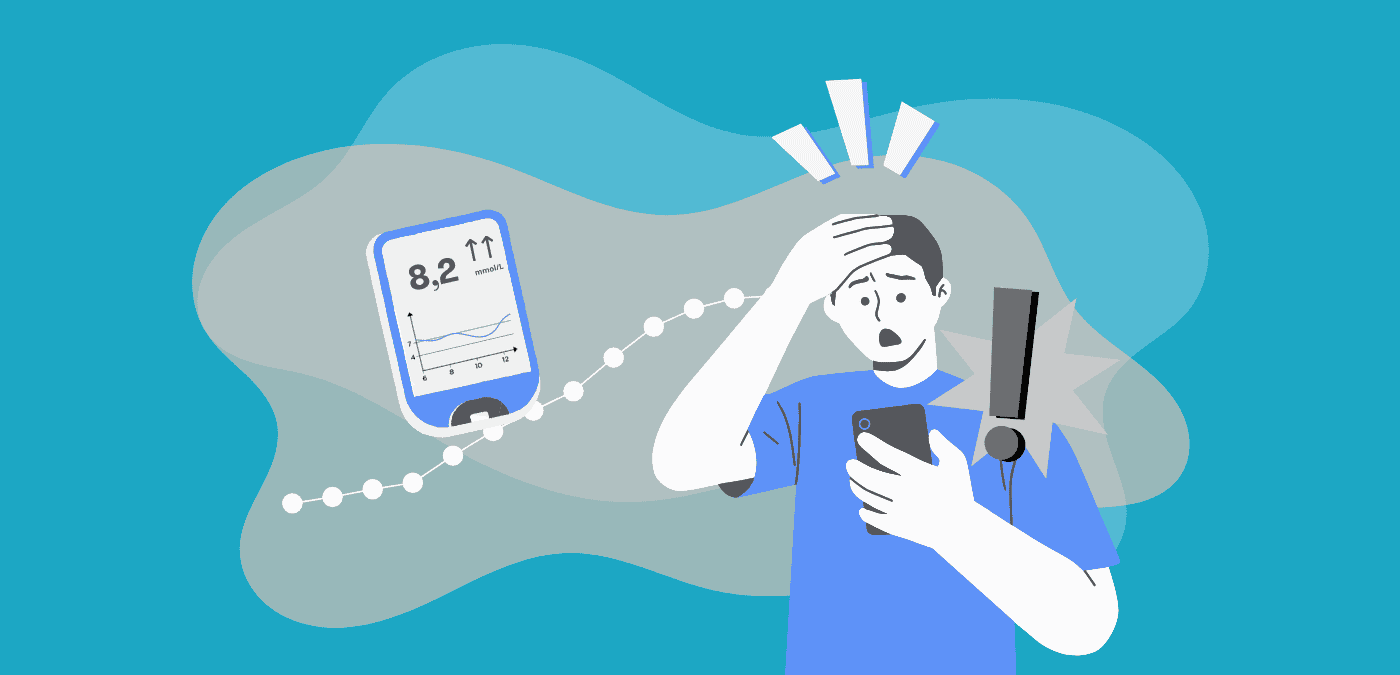
Over the last few years, the rise of ever more performing technologies has completely revolutionized type 1 diabetes (T1D) management. Among those, hybrid closed loop systems, also called artificial pancreases or automated pumps, have deeply impacted the way many people with diabetes go about their daily life. But, what are they, exactly? How do they work? Most importantly, what is the user’s new role on the day to day? What’s an artificial pancreas?
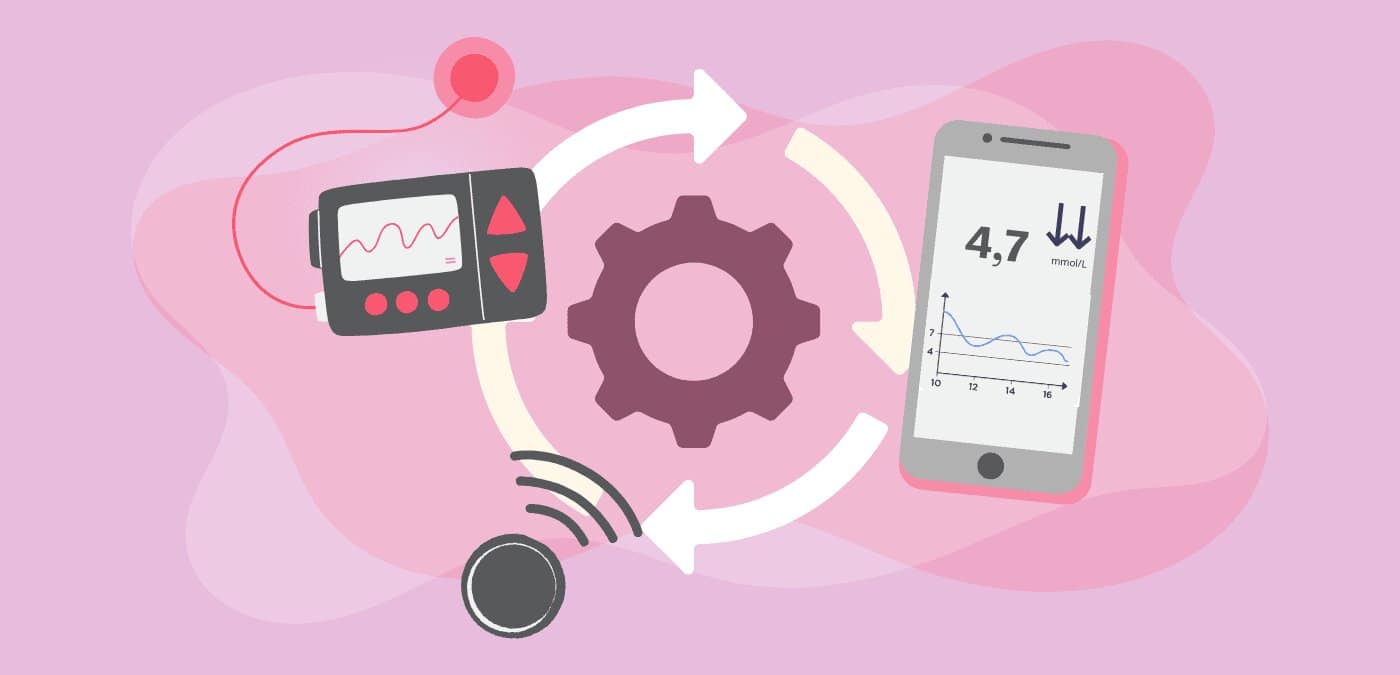
Hybrid closed loop systems have three components:
- Insulin pump
- Continuous glucose monitoring (CGM) sensor
- Mathematical algorithm
These components communicate with each other almost in real time. The sensor measures blood sugar levels and their fluctuations, the algorithm analyzes this data, and the pump automatically adjusts insulin delivery. For instance, if blood sugar levels are dropping, the system can reduce or suspend insulin delivery to avoid risk of hypoglycemia. Inversely, if blood sugar levels are rising, the system can increase insulin delivery and, depending on the system, can even administer a correction bolus.
The goal of these systems is to mimic how the pancreas naturally works as closely as possible. To achieve this, the algorithm uses many parameters other than current blood sugar levels, such as blood sugar targets, active insulin and insulin duration of action.
The automated features of this technology help reduce the mental load associated with daily diabetes management. Studies have shown that these systems are beneficial to a wide range of people with T1D, regardless of their age, ability to use technology, complications or blood sugar management.
This technology is generally recommended for anyone who wants to use it and has access to it. However, the cost and limitations in coverage remain a significant hurdle for many.
There are also commercial and DIY systems. Depending on the model, some parameters can be adjusted by the user, and others are automatically adjusted by the algorithm. This is why two people with different pumps can have very different experiences.
A smart, collaborative system
Even though they are called artificial pancreases, these systems are not yet fully autonomous. The user still plays an important role in managing their diabetes. For instance, they still need to count carbohydrates and enter them into the system before each meal. They also have to plan for physical activity and periodically adjust certain parameters.
This why these systems are considered to be hybrids: the technology helps the user, but cannot replace them.
There are also some habits to adopt to ensure the system works optimally day after day.
- A CGM sensor must be used and connected to the system at all times. The system needs the CGM data to work properly.
- Insulin must be administered before each meal to ensure optimal blood sugar management, even though some systems can make up for a forgotten dose.
- Physical activity must be entered into the system.
- It is preferable to trust and the system’s recommendations as they are and not to modify them, and boluses shouldn’t be taken too close in time.
- Some parameters must be adjusted with the help of a healthcare team.
Some benefits… and some limitations
Scientific and clinical data show that generally, artificial pancreases:
- Help increase time spent in target range,
- Reduce hypoglycemia,
- Reduce glycemic variability,
- Improve sleep quality and, for some, quality of life.
Interestingly enough, people who have a harder time managing their blood sugar are often the ones who benefit the most from these systems.
However, they are still not perfect. Certain limitations remain:
- Risk of hypoglycemia during physical activity,
- Lack of flexibility in adjusting parameters, depending on the system,
- High cost and limited access — in some provinces, they are only available through private insurance;
- Slight delay between current blood sugar and sensor blood sugar when fluctuating quickly,
- Heavy mental load despite improved blood sugar management, for many.
Even though these technologies help improve statistics and reduce the complexity of daily T1D management, they cannot eliminate it completely.
In summary
Hybrid closed loop systems are now considered as the choice treatment for T1D. More and more models become available and offer more adjustments to align with users’ preferences and lifestyles. Each system has its benefits and limitations. While technology can play a significant role in blood sugar management, it still relies on the collaboration between the user and the system to work optimally.
To find out more
To dig deeper, log in to Support and discover our modules on artificial pancreases:
- Hybrid Closed Loop Systems Basics (artificial pancreases)
- Understanding how pumps work:
References:
- Diabetes Canada Clinical Practice Guidelines Expert Committee. Diabetes Canada 2018 Clinical Practice Guidelines for the Prevention and Management of Diabetes in Canada. Can J Diabetes. 2018;42(Suppl 1):S1-S325.
- Y. (2025). Practical implementation of automated insulin delivery systems in 2025: A French position statement update. Diabetes & Metabolism, 51(3), 101637.
- Di Molfetta, S., et al. (2025). Tips for successful use of commercial automated insulin delivery systems: An expert paper of the Italian working group on diabetes and technology. Diabetes Research and Clinical Practice, 223, 112117.
- Chambers, A., & Halperin, I. (2025). Optimizing the Use of Automated Insulin Delivery (AID) Systems in Routine Clinical Care of People with Type 1 Diabetes. Canadian Diabetes & Endocrinology Today, 5-15.
Written by: Amélie Roy-Fleming, RD, CDE, M.Sc.
Reviewed by:
- Sarah Haag, R.N., B.Sc.
- Rémi Rabasa-Lhoret, MD, Ph.D.
- Anne-Sophie Brazeau, P.Dt., Ph.D.
Linguistic revision by: Marie-Christine Payette