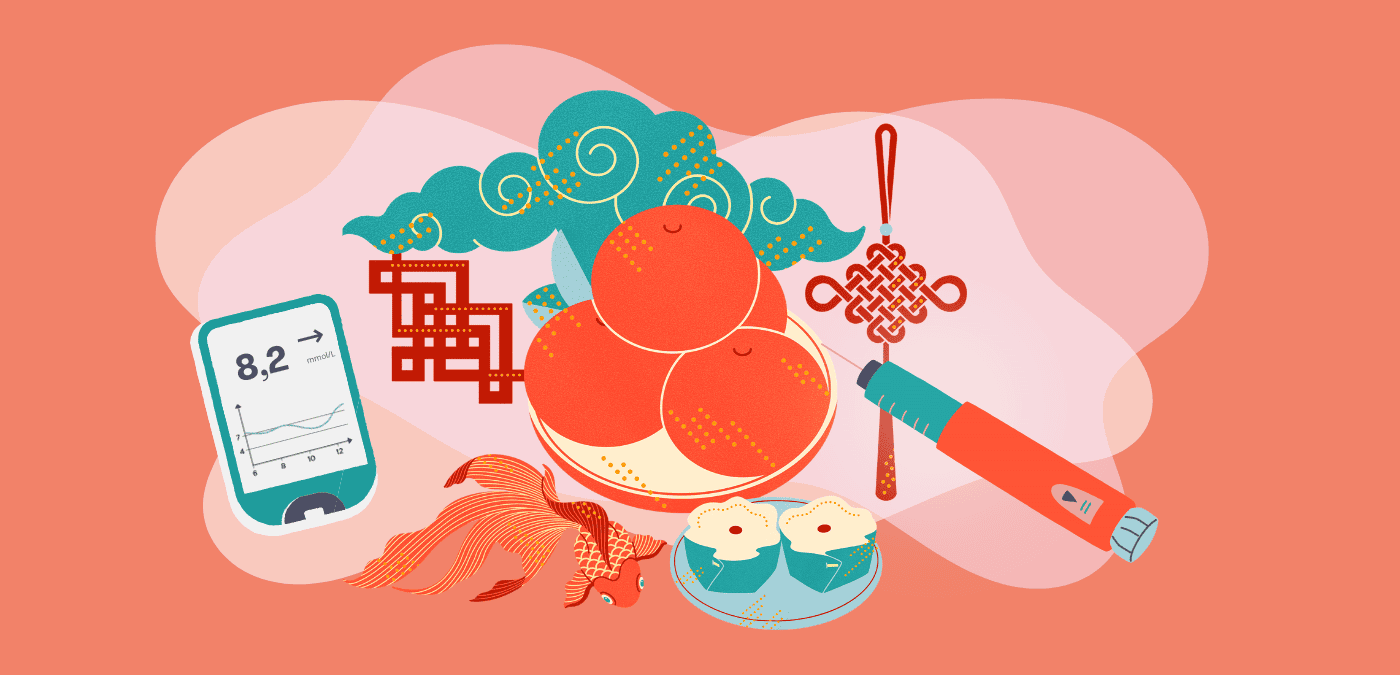
Chinese New Year is a time of reunion, tradition, and hope for the year ahead. Festive meals, symbolic foods, late nights, and family gatherings are all part of the celebration. For people living with type 1 diabetes (T1D), however, these joyful traditions can also bring challenges: carbohydrate-rich dishes, disrupted routines, and social pressure to eat “just a little more.”
The good news is that enjoying the Chinese New Year does not require strict food restrictions. With a bit of planning, such as understanding portion sizes, balancing different food groups, and adjusting insulin timing, it is possible to fully participate in traditional celebrations without guilt or stress. Rather than avoiding festive foods, the goal is to enjoy them mindfully, while aligning meals, insulin, and daily routines with your diabetes management.
Understanding traditional holiday foods
Many Chinese New Year staples are more than just sources of nourishment—they also carry deep cultural meaning and symbolism. Traditional Chinese New Year meals often combine fast-absorbing carbohydrates with rich protein- and fat-heavy dishes. Many dishes can be dense and sometimes prepared with added sugar or fat, which may result in delayed or prolonged rises in blood sugar.
Carbs are part of the celebration
Carbohydrate-rich dishes such as rice cakes (nian gao), glutinous rice balls (tang yuan), and eight-treasure rice pudding are central to the celebrations, representing wishes for good fortune, healthy growth, and family togetherness. The carbohydrates in these foods—especially those made from white rice, sticky (glutinous) rice, or refined wheat flour—typically cause quicker blood sugar spikes (high glycemic index), particularly when eaten alone or in large portions.
Protein and fat can delay blood sugar spikes
Protein- and fat-rich dishes, like steamed fish, chicken, braised pork belly, and deep-fried meatballs, symbolize abundance and prosperity. Large portions of high-fat and high-protein meals slow down digestion, which can delay the rise in blood sugar after eating and prolong the time blood glucose remains high. As a result, blood glucose levels may initially stay stable or even drop, increasing the risk of early hypoglycemia if insulin acts before glucose enters the bloodstream. Blood sugar levels may rise 3-6 hours after the meal and remain elevated, when the insulin taken earlier has lost much of its effectiveness.
Practical tips to manage blood sugar during festive meals
- Carbohydrate counting and portion estimation.
As usual, knowing how to estimate carbohydrate content can help you make more confident insulin decisions during festive meals. Pay attention to portion sizes; use visual cues (e.g., the fist of an adult is about the size of one cup of rice) when precise carb counts are not available.
- Balance your plate.
Include vegetables at every meal to add fiber and slow glucose absorption.
For homemade dumplings, choose whole-wheat flour instead of white flour with fresh vegetables and lean meats to increase fibre and protein. Pair high-carb food (e.g., rice cakes) with an example of food which contains protein and healthy fats to reduce sharp blood sugar spikes.
- Adjust insulin timing—not just the dose.
Because high-fat and high-protein meals delay digestion, if you use a manual insulin pump, consider extended or split bolus options to better match delayed glucose rises. If you use multiple daily injections, taking part of your rapid-acting insulin at the start of the meal and the remainder later (for example, 1–2 hours after eating) may help, depending on your usual patterns. Avoid correcting too early if blood sugar rises slowly, as this can increase the risk of insulin stacking and hypoglycemia.
- Monitor beyond the first few hours.
Blood sugar increases may occur 3–6 hours after the meal, especially with fried high-fat protein dishes. Check your blood sugar more frequently or watch CGM trends later in the day. Be cautious when treating early lows, as overcorrecting can worsen late hyperglycemia.
- Plan for multi-course meals.
Traditional meals are often served in a structured order, though the sequence varies by region. For meals that last several hours or when early dishes are low in carbohydrates, it may be preferable to administer a partial dose of insulin initially, then observe food intake and adjust as needed. This approach can help reduce the risk of hypoglycemia if dishes are served slowly or with long intervals. Understanding the menu in advance can help you better time insulin and avoid early hypoglycemia.
- Choose beverages carefully.
Unsweetened milk, soy milk, or cold-brewed tea are good options. If you drink alcohol, eat beforehand and monitor closely, as alcohol can increase the risk of delayed hypoglycemia.
- Focus on flexibility, not perfection.
No strategy works perfectly for every meal—and that’s okay. Blood sugar responses are individual and can be hard to predict. Trial and error are part of learning what works best for you. Checking your blood sugar is the best way to see whether a strategy is working and how to adjust it next time.
- Stay active when you can.
Helping prepare food, cleaning and walking after meals, or joining family activities can gently support glucose management.
- Avoid arriving overly hungry.
Having a small low- or no-carb snack before a large meal can prevent overeating and make carbohydrate estimation easier.
Chinese New Year is about togetherness, not numbers.
With thoughtful planning, flexible insulin strategies, and self-compassion, people living with type 1 diabetes can fully participate in the traditions that matter most—while keeping their health a priority.
__________________
To find out more
To learn more on above mentioned topics, connect to the Support platform and view the following courses:
Strategies for different meals
All about insulin dose adjustments
Aware of the value of every experience, the BETTER registry collects testimonies from people living with type 1 diabetes in Canada, as well as from parents of affected children. By registering and sharing your story, you will help advance research and will also gain access to webinars on various aspects of type 1 diabetes. The questionnaire is also available in Mandarin.
References:
Diabetes Victoria. (n.d.). Healthier Lunar New Year eating. https://www.diabetesvic.org.au/healthier-lunar-new-year-eating/
Guo, K., Ye, J., Zhang, L., Tian, Q., Fan, L., Ding, Z., … & Yang, L. (2022). Effect of the Chinese new year public holiday on the glycemic control of T1DM with intensive insulin therapy. Frontiers in Endocrinology, 13, 915482. doi: 10.3389/fendo.2022.915482Smart, C. E., King, B. R., and Lopez, P. E. (2019). “Insulin Dosing for Fat and Protein: Is it Time?” Diabetes Care, 43(1), 13–15. doi: 10.2337/dci19-0039
Written by: Sarah Haag, Clinical Nurse, B.Sc.
Reviewed by:
- Rémi Rabasa-Lhoret, MD, Ph.D.
- Sarah Haag, Clinical Nurse, B.Sc.
- Anne-Sophie Brazeau, P.Dt., Ph.D.
- Amélie Roy-Fleming, RD, CDE, M.Sc.
- Cassandra Locatelli, B.Sc.
- Zekai Wu, MD, PhD
- Yabo Chen, RD, Master Student